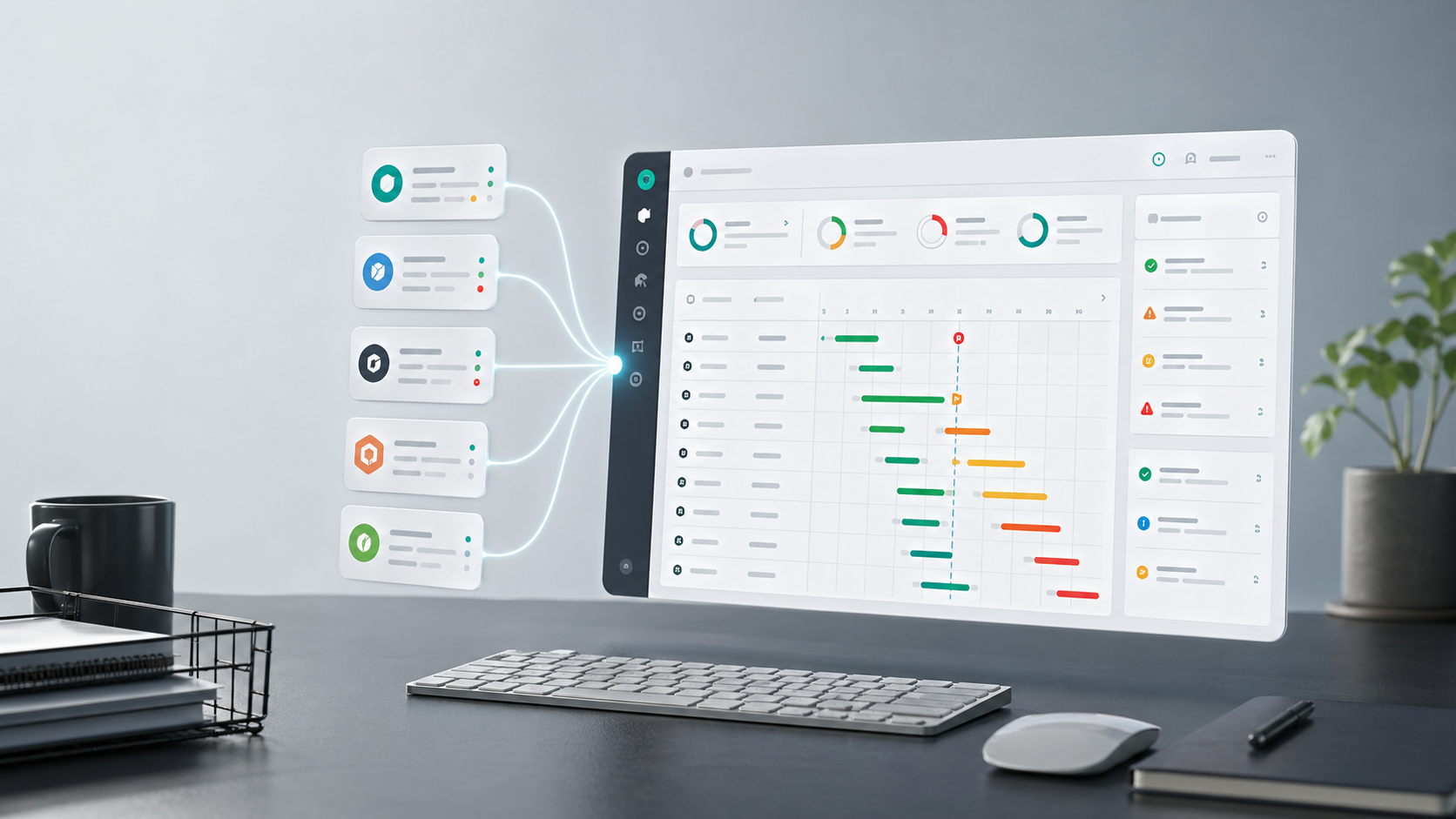
Most organizations do not set out to spread domains across multiple registrars. It happens gradually. A founder buys the first domain in one account. Marketing registers a campaign domain somewhere else. An agency manages a client domain through its preferred provider. An acquisition brings in another set of names. Years later, the portfolio is scattered.
The real problem is not the number of registrars. The problem is that each registrar becomes its own island of renewal dates, billing contacts, login credentials, notification settings, and ownership assumptions.
When the team checks renewals registrar by registrar, it stays one export, one inbox, or one forgotten account away from missing something important.
Start with one inventory, not one registrar
The first mistake is trying to make each registrar account perfect before creating a central record. That can take weeks, especially when some accounts belong to clients, vendors, former employees, or business units that no longer exist.
Build the central inventory first. It can be incomplete at the beginning. What matters is that every known domain has one place to live, even while some fields still need research.
At minimum, collect:
- Domain name
- Registrar
- Expiration date
- Current status
- Owner or responsible team
- Renewal contact or escalation path
- Notes about access, billing, DNS, hosting, or client responsibility
This gives the team a working map. The map can improve over time, but the absence of a map is the risk.
Normalize the fields that registrars describe differently
Different registrars use different labels and export formats. One may call a date “expires,” another “renewal date,” another “registration expiration.” One account may show whether the provider will renew automatically, while another hides payment state behind billing settings.
A central inventory should translate provider-specific details into fields your team understands consistently. Nobody should need to remember how each registrar names the same operational concept.
Use a standard set of internal terms: active, expiring, expired, suspended, parked, client-owned, agency-owned, unknown owner, renewal needed, review needed. This creates a common language across registrars.
Do not rely on registrar emails alone
Registrar emails are useful signals, but they are not a reliable renewal process. They depend on the contact address inside the registrar account. That address may belong to an old employee, an agency, a client, a shared mailbox nobody checks, or a personal address used during the first purchase.
For domains spread across registrars, reminders should come from the central inventory. That lets renewal notices follow the team’s responsibility model rather than each registrar’s account history.
For ordinary domains, a standard email reminder may be enough. For client domains, the reminder may need to go to an account manager. For business-critical domains, the reminder may need to appear in Slack, trigger a task, or escalate earlier than normal.
Decide which domains need earlier warning
A single reminder schedule is rarely enough for a mixed portfolio. Some domains can be renewed quickly. Others require client approval, procurement, legal review, registrar access recovery, or coordination with finance.
Use a default reminder window for the portfolio, then override it for high-friction domains. A production domain owned by a client may need a 60- or 90-day warning. A low-risk parked domain may only need the standard schedule.
The question is not only “when does this domain expire?” The better question is “how much time does this team need to act safely?”
Track ownership separately from registrar access
Registrar access does not always mean ownership. An agency may have login access to a client registrar account. An IT team may manage DNS for a domain owned by marketing. A vendor may hold a domain that the business considers strategic.
When renewals are spread across registrars, the inventory should separate three ideas:
- Who legally or commercially owns the domain
- Who can access the registrar account
- Who is responsible for renewal action
Those three answers may be the same. Often, they are not. Recording the difference prevents confusion during the week when a renewal suddenly becomes urgent.
Use tags to make the portfolio searchable
A multi-registrar portfolio becomes easier to manage when domains can be grouped in ways that match real work. Registrar is only one grouping. Teams also need to find domains by client, brand, product, business unit, risk level, environment, owner, or status.
Useful tags might include: client name, production, email, redirect, parked, legacy, high risk, review needed, acquisition, campaign, internal, vendor-managed, or transfer candidate.
Tags help the team answer practical questions quickly: Which client domains expire this quarter? Which domains are still at the old registrar? Which records need ownership review? Which names are safe to retire?
Review registrar spread as its own risk
Using multiple registrars is not automatically a problem. Some portfolios need it because of client ownership, country-code domains, acquisitions, or vendor history. The risk appears when nobody knows why the spread exists.
During portfolio reviews, look at registrar distribution directly. Identify registrars with only one or two domains, accounts controlled by former vendors, domains that could be consolidated, and records where access is unclear.
Consolidation is not always the right answer, but unexplained fragmentation should be investigated. Every registrar account adds another place where renewal, billing, and contact settings can drift.
Create a renewal review rhythm
Once the inventory exists, the process should be light enough to repeat. A monthly review works well for large or high-risk portfolios. A quarterly review may be enough for smaller teams.
The review should focus on the next 30, 60, and 90 days. Look for upcoming expirations, unknown owners, missing registrar details, domains without reminder targets, and domains that require client or finance approval.
This rhythm turns renewal tracking from a scramble into routine operations. The team should not be surprised by a registrar email because the central inventory has already surfaced the same risk earlier.
What a reliable system should produce
A good multi-registrar renewal process should make the following questions easy to answer:
- Which domains expire soon, regardless of registrar?
- Which registrar holds each domain?
- Who is responsible for renewal?
- Which domains need client approval or internal escalation?
- Which domains have missing or uncertain ownership details?
- Which registrar accounts should be reviewed or consolidated?
If those answers require logging into several registrars and comparing exports by hand, the renewal process is still too dependent on manual reconstruction.
Where domainnotifications.com fits
domainnotifications.com gives teams a central workspace for domains held across different registrars. You can import existing spreadsheets, track registrar and expiration details, add notes and tags, record ownership context, monitor renewal risk, and route reminders through the channels your team uses.
For teams focused on renewal alerts, the domain expiration reminder software page shows how email, Slack, SMS, and webhook reminders fit together. For teams trying to organize the whole inventory, the domain portfolio management workspace explains the portfolio workflow.
The point is not to force every domain into one registrar. Many teams cannot do that, and many agencies should not. The point is to make renewal responsibility visible across the whole portfolio, even when the domains themselves remain distributed.
That is what makes a multi-registrar portfolio manageable: one operating view, clear responsibility, and reminders that follow the team instead of a registrar account.