Most domain inventories start with a simple assumption: put every domain in one shared place so the team can find what it needs. That is a good instinct. Domains are operational assets, and hidden records make missed renewals, unclear registrar access, and slow handovers more likely.
But as the inventory grows, another problem appears. Not every domain record should be visible to everyone. A team may need broad visibility into ordinary client domains, product domains, redirects, and renewal schedules while keeping sensitive acquisition names, internal infrastructure, campaign plans, or executive projects private.
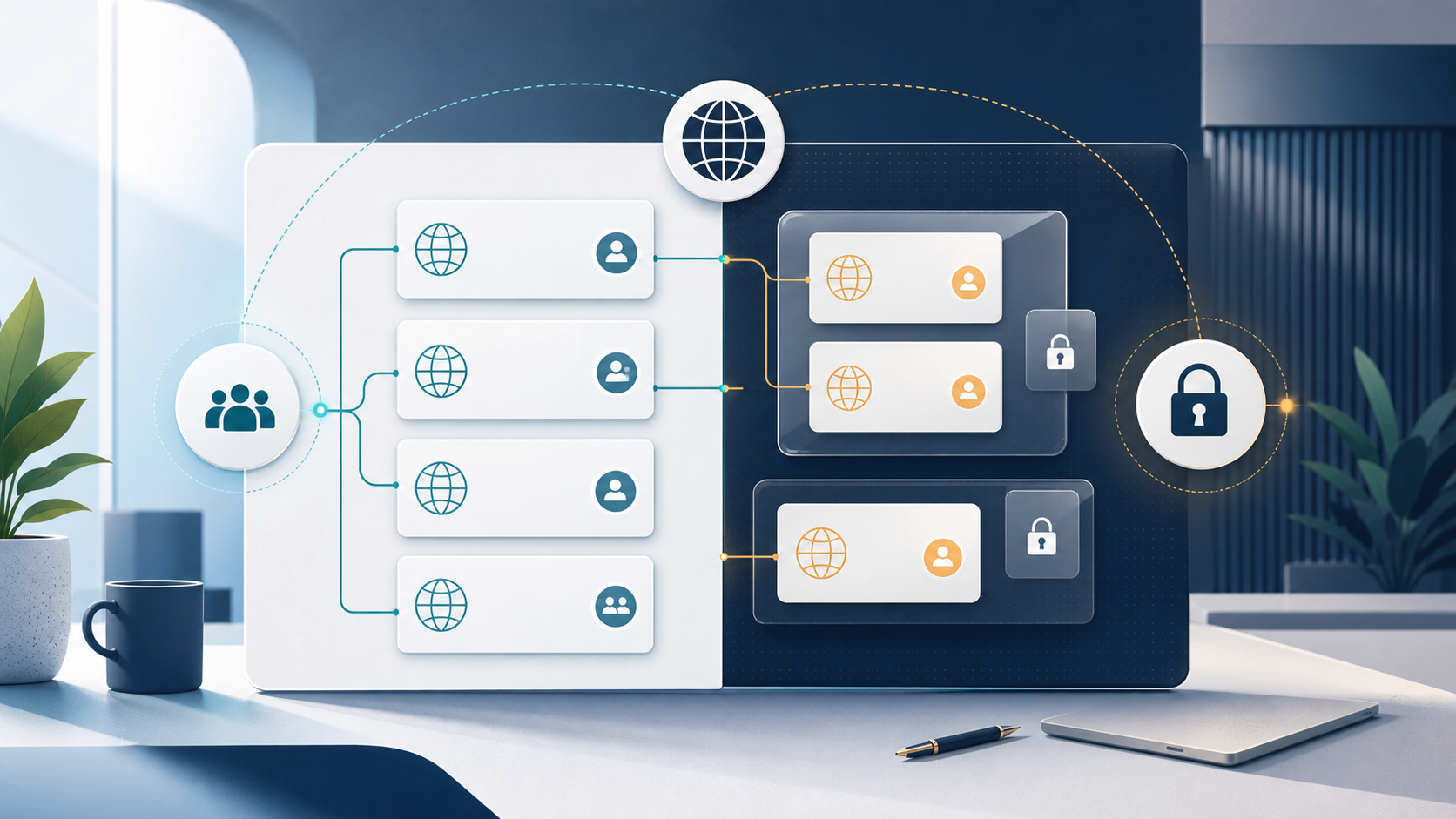
The choice is not between a fully open inventory and disconnected private spreadsheets. Mature domain operations usually need shared and private records inside the same operating system.
Why shared visibility matters
Shared domain records reduce the amount of operational knowledge trapped in individual inboxes, registrar accounts, and memory. When a domain is visible to the people who support it, the team can answer basic questions without starting a search project.
For most organizations, shared records are the right default for domains tied to:
- Public websites, applications, and customer-facing brands.
- Client properties that account managers, support staff, or technical teams may need to review.
- Redirects, parked domains, defensive registrations, and campaign domains that are already known internally.
- Domains with upcoming renewals that require coordination across finance, operations, IT, or client services.
- Records where a teammate may need to export, review, or update operational details during handover.
Shared does not mean careless. It means the record is part of the team's normal operating view. The domain name, registrar, expiration date, owner, status, renewal responsibility, tags, and notes should be available to the people responsible for keeping the portfolio healthy.
Why private records still belong in the inventory
Private domain records are not a workaround for poor process. They are useful when the record itself carries sensitive business context.
Examples include domains connected to:
- An unannounced product, campaign, acquisition, or rebrand.
- A legal matter, executive initiative, or confidential client project.
- Internal systems where broad visibility would expose infrastructure details unnecessarily.
- Research, testing, or negotiation activity that should not appear in a general workspace list.
- Personal founder or leadership domains that still need renewal monitoring but should not be widely browsable.
The danger is that sensitive records often get pushed into a separate file, a personal reminder, or a private registrar account with no operational backup. That may protect confidentiality in the short term, but it can create a renewal risk later. A private record still needs an expiration date, owner, registrar context, and reminder path.
The real question is who needs to act
When deciding whether a record should be shared or private, start with action rather than curiosity. Who may need to act on this domain before something goes wrong?
If multiple teammates need to renew, update, export, hand off, or explain the domain, the record probably belongs in the shared inventory. If only one owner or a small trusted group should know the domain exists, it may need to be private. If the answer changes over time, the record's visibility should change too.
A useful decision framework looks like this:
- Would a renewal failure affect customers, revenue, a client relationship, or a public brand?
- Does more than one person need access to the domain's operational context?
- Would broad visibility reveal confidential plans or sensitive infrastructure?
- Can the responsible owner still receive reminders if the record is private?
- Is there a future date when the record should move from private to shared?
This keeps the decision practical. Privacy is not about hiding records from the process. It is about matching visibility to the people who have a legitimate operational reason to see the record.
Avoid the two-inventory trap
The most common mistake is creating one shared inventory and one private inventory. At first, that seems tidy. The shared list is for normal domains. The private file is for sensitive ones. Then the private file quietly becomes stale.
Someone forgets to update an expiration date. A registrar changes. A campaign launches and the domain should become visible, but nobody moves it. A teammate leaves and the private reminder leaves with them. The team has protected the record from visibility but not from neglect.
A better approach is one domain portfolio with record-level visibility. Shared and private domains can follow the same data model, reminder logic, import process, export workflow, and review cadence. The difference is who can see and act on each record.
Set a default, then define exceptions
Teams make better visibility decisions when they agree on a default. For many agencies and IT teams, the default should be shared visibility for active operational domains, with private visibility reserved for a clear reason.
That default prevents private records from becoming a habit. It also gives teammates a simple expectation: if a domain supports a client, product, service, or public workflow, it should usually be visible in the workspace.
Private exceptions should be specific. A useful private-record note might say, "Pre-launch campaign domain, keep private until public announcement," or "Executive project, owner receives renewal reminders." A note that says only, "Private," gives the next reviewer no decision context.
Use roles and ownership together
Record privacy is only one layer of access control. Teams also need role boundaries. A domain viewer may need to inspect and export records but should not edit renewal settings. A domain manager may need to create, update, import, export, and delete records. A domain admin may need broader workspace control.
Private records work best inside this broader permission model. The team can keep non-sensitive domains visible across the workspace while limiting private records to the owner or appropriate trusted users.
This distinction is especially useful for agencies. A project manager may need access to most client domains, but not to acquisition-related domains or sensitive internal infrastructure. A technical lead may need to manage renewal details without seeing every confidential business initiative.
Review privacy during portfolio maintenance
Visibility should not be set once and forgotten. Domain records change meaning over time. A private launch domain may become public. A former client domain may move into handover. An internal test domain may become production infrastructure. A confidential project may be cancelled and no longer need renewal.
During a regular domain portfolio review, include a short privacy pass:
- Which private domains should now be shared?
- Which shared domains contain notes that should be cleaned up or limited?
- Which private records are missing expiration dates, registrar details, or owners?
- Which domains are visible to more people than needed?
- Which private domains need earlier reminders because fewer people can see them?
This turns privacy from a static setting into an operational habit. The goal is not to hide as much as possible. The goal is to keep the right people informed at the right time.
How reminders should work for private domains
Private records need reminders as much as shared records do, sometimes more. Fewer people can notice a problem, so the reminder path has to be intentional.
For shared records, workspace defaults may be enough. For private records, consider whether the reminder should go to the record owner, a specific email address, a verified SMS destination, or another channel available to the workspace. If a private domain is critical, it may need a longer reminder window so the responsible owner has time to act without relying on wider team visibility.
The important rule is simple: privacy should never disable renewal accountability. If a domain is important enough to keep, it is important enough to monitor.
Where domainnotifications.com fits
domainnotifications.com is designed for teams that need a shared domain portfolio without making every record equally visible. Eligible workspaces can track expiration dates across registrars, add tags and notes, mark sensitive records as private, invite teammates with role-based permissions, and route reminders through the channels their plan supports.
If your current setup relies on a shared spreadsheet plus a second private file, the bigger problem may not be the spreadsheet format. It may be that the workflow cannot handle different visibility needs inside the same portfolio.
For a broader inventory framework, read how to build a domain inventory your team can maintain and trust. If you are evaluating a product-level solution, see the domain portfolio management software overview.
The best domain management process does not force every record into the open or let sensitive records disappear into private files. It gives teams one reliable inventory with enough visibility control to match how real domain work happens.